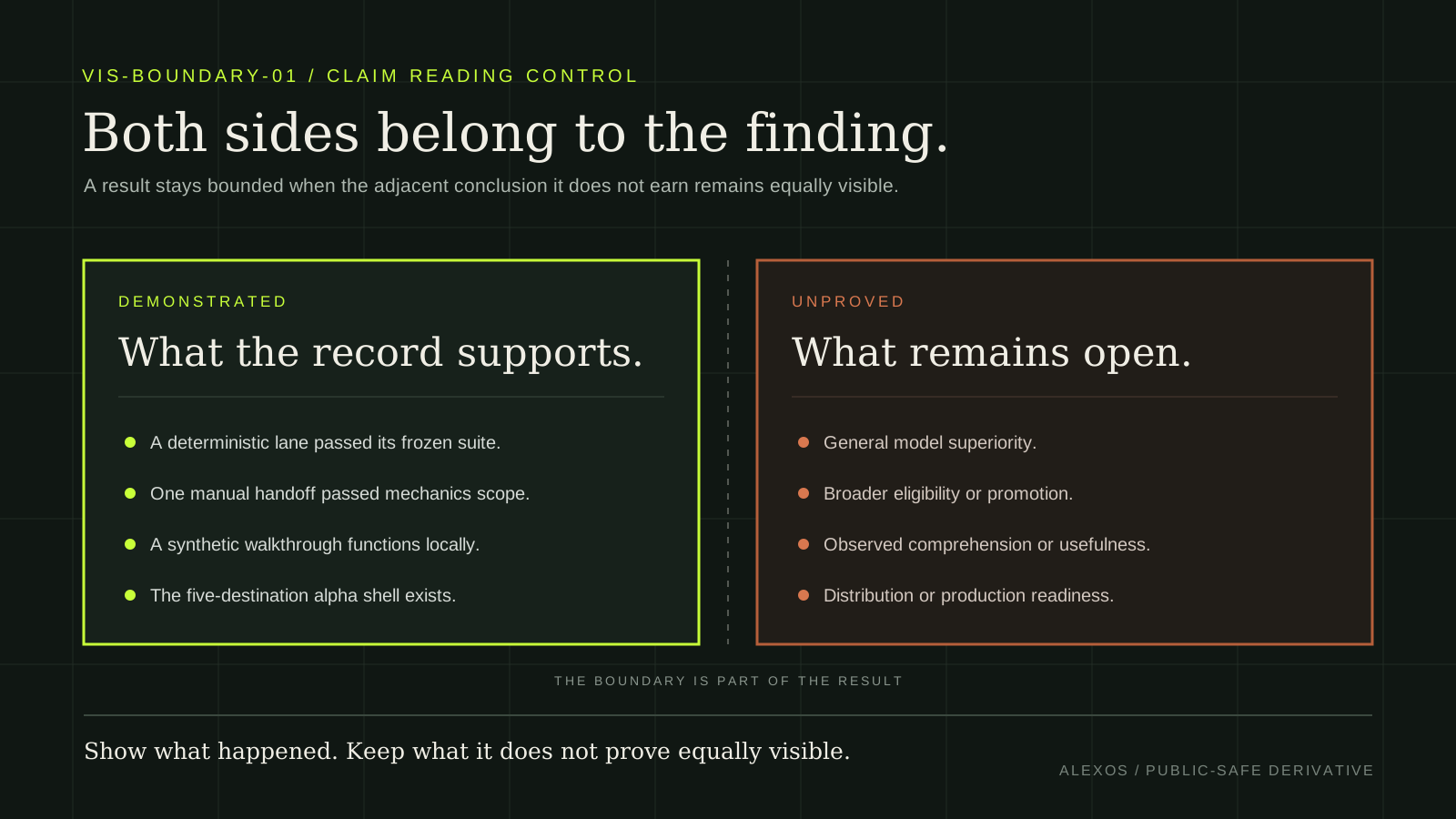
A two-panel reading device keeps a bounded result beside the larger conclusion it does not yet support. Both sides are part of the finding.
Governing rule
Show what happened. Keep what it does not prove equally visible.
Context
Technical demonstrations are easy to overread. A passing local test can become a general capability claim; one handoff can sound like promotion; a synthetic walkthrough can be mistaken for observed usefulness; and a private alpha can begin to resemble a release.
Current state
AlexOS public artifacts use demonstrated and unproved as paired evidence states. The left panel names the observed or verified result. The right panel names the adjacent conclusion that remains open, blocked, or outside the test’s jurisdiction.
Current evidence
What the record supports.
Required panels
2
Example pairings
4
Automatic promotion
Never
Open claims retained
Yes
Independent validation
Not claimed
A deterministic normalization lane passed its frozen tests; general model superiority remains unproved
One manual handoff passed its declared mechanics scope; broader eligibility and promotion remain unproved
A synthetic evidence walkthrough functions locally; first-use comprehension and usefulness remain unproved
The five-destination application shell exists locally; distribution and production readiness remain unproved
Public evidence files
Inspect the record.
Public-safe derivatives only. Source availability does not broaden the claim stated on this page.
Public claim matrixClaim-to-source mappings remain under final lineage and privacy reviewWithheld
Internal source recordsProtected test packages and application records remain outside the public reading controlWithheld
Claim boundary
What remains unearned.
The card does not independently verify either panel
Unproved does not mean false
Demonstrated does not mean universal or permanent
A passing test does not inherit authority outside its frozen scope
The device cannot substitute for source records or reproduction
Next evidence
Apply the paired state wherever a public result could reasonably be mistaken for a broader claim, then test whether first-time readers can describe both sides without coaching.